
100 Years of Progress — and the Governance Work Ahead

This year marks 100 years of Black History Month — a century that began with a fight for civil rights and a broader pursuit of economic freedom. The long arc of that movement has always been about more than access. It has been about agency — who shapes markets, who allocates capital, who governs the institutions that influence opportunity in everyday life.
Black corporate directors are part of that story. Their presence in boardrooms across this country reflects doors opened, barriers broken, and expertise earned. But more importantly, it reflects something often overlooked: corporate governance is one of the most powerful levers of economic opportunity in modern society.
That is why Path to 15|55 undertook its latest research, Governing for Long-Term Value: Black Corporate Directors on Fiduciary Duty and Inclusion, to offer a rare governance temperature check grounded in the perspectives of Black corporate directors serving across industries.
In conversation after conversation, we heard a consistent theme from Black corporate directors across industries. They understand that talent strategy, market access, supply chain resilience, and demographic shifts are material drivers of enterprise value. Yet in today’s environment, discussions that connect inclusion to those drivers are increasingly treated as optional — or worse, outside the bounds of fiduciary duty.
Fiduciary duty ultimately comes down to one question: Does this decision protect and grow long-term enterprise value? At its core, that is the job of a corporate director. Stewardship of strategy and oversight of material drivers such as talent pipelines, market access, supply chain resilience, risk exposure, and competitive positioning. When those drivers shift, governance must shift with them.
The report’s findings are strikingly consistent. 100% of surveyed directors agree that board diversity supports competitive advantage. 88% agree that a sustained focus on diversity and inclusion strengthens their ability to fulfill fiduciary duty. At the same time, 81% report increased resistance to diversity initiatives, even as stakeholder expectations for strong governance and competitive performance remain unchanged.
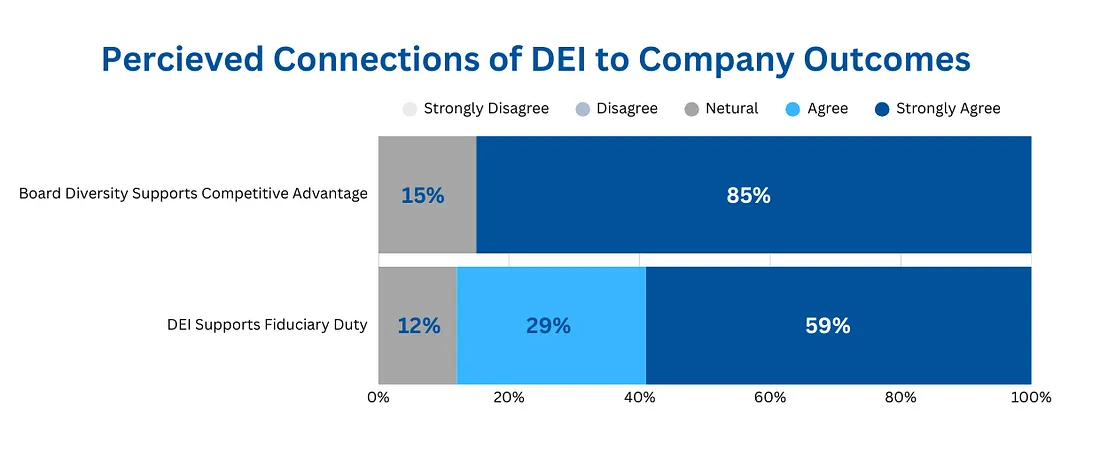
When paired with findings from Spencer Stuart U.S. Board Index 2025, the data also reveals something more structural. Board refreshment is slowing. The average age of new directors is rising. The percentage of underrepresented directors in incoming classes has declined. Mandatory retirement ages are extending. These decisions may appear incremental, but over time, they shape who is in the room when strategy is set and risk is assessed.
Black corporate directors are navigating this landscape from within the boardroom. They continue to report expectations from investors, employees, customers, and partners that companies attract diverse talent, enter new markets, and perform effectively in a diverse economy. The language surrounding diversity may be contested, but the underlying performance expectations remain firmly in place.
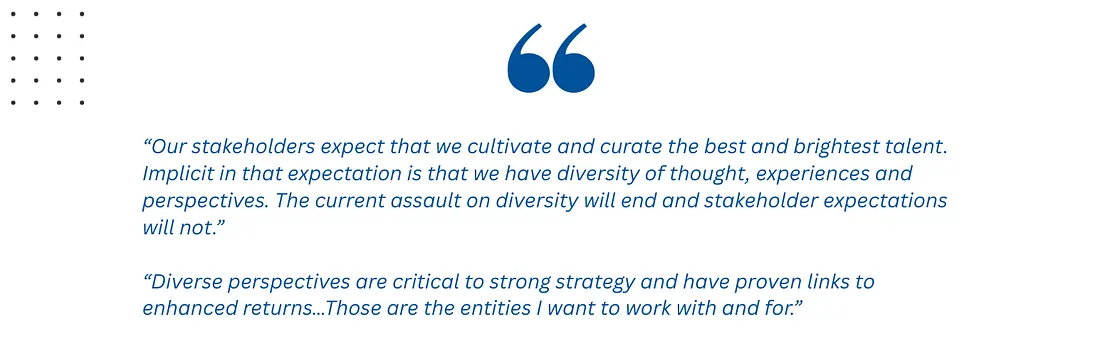
This is a governance challenge. When a small group of well-resourced, politically-driven actors seeks to artificially narrow the definition of fiduciary duty, it does not reduce risk. It obscures it. When boards treat inclusion as external to value creation, they disconnect oversight from the realities shaping markets and workforce dynamics.
The directors who participated in this research are calling for governance discipline. They are asking for the tools and alignment necessary to connect inclusive practices directly to performance, growth, and long-term resilience.
This report names what many directors already understand: long-term enterprise value in a diverse economy cannot be governed through a partial lens.
If you serve on a board — or advise those who do — I encourage you to read the full report.