Who Gets the Conditions to Thrive?
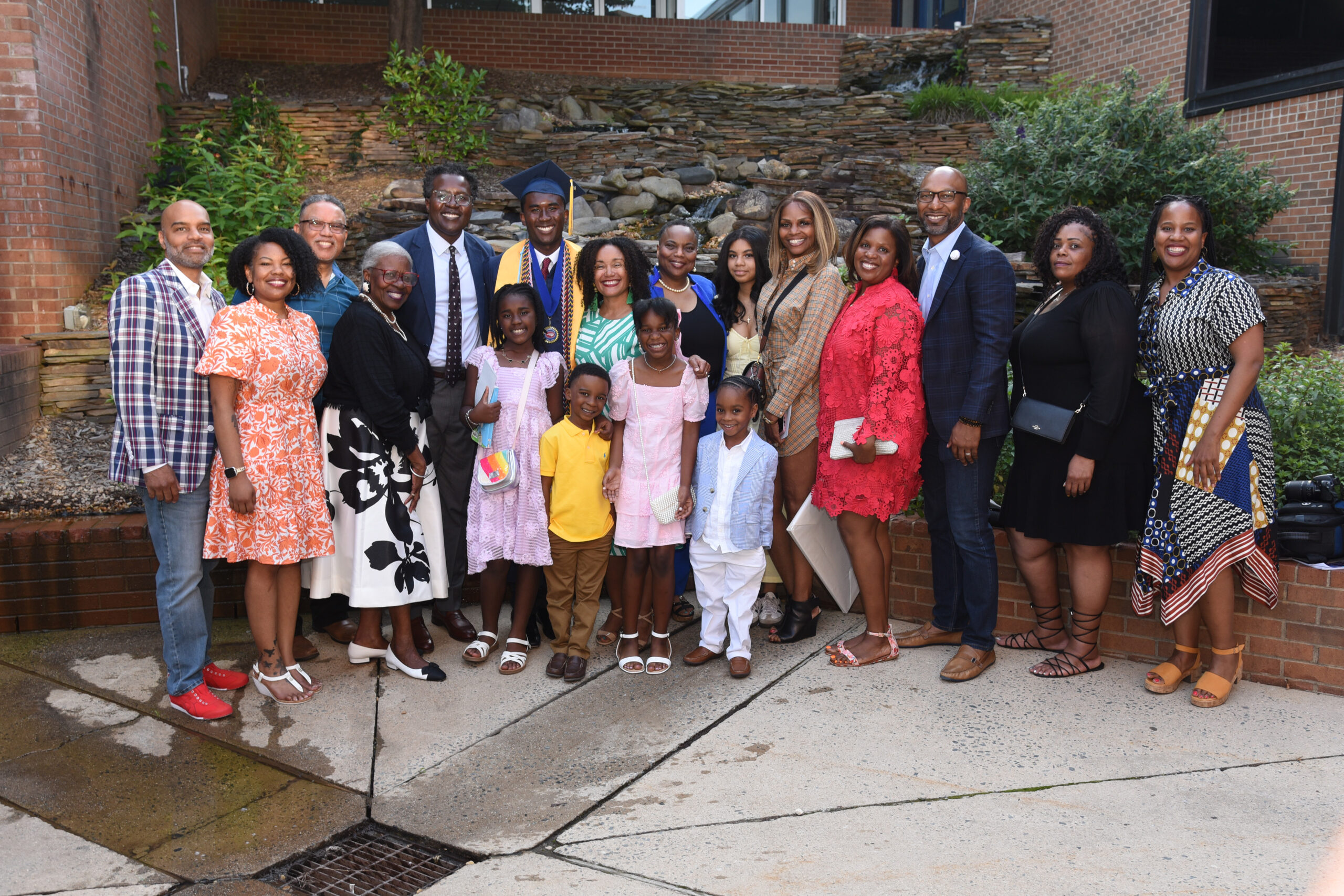
A few weeks ago, my extended family gathered at my house to celebrate my son’s high school graduation.
It was the kind of gathering that reminds you how much life experience can fit inside one family. Every person in the room had paved a different path. Some have PhDs, and others have built their lives and careers without a high school diploma. Some live check to check, while others are actively building wealth. And like most families, our opinions run the gamut depending on the issue.
Even inside one family, there is no single story, no single worldview, and no single experience of what this country has made possible. But everyone was there for the same reason.
They came to celebrate Dylan. To pour into him. Because before investment is a financial term, it is a human act. Investment is what happens when people decide that someone’s future is worth their time, attention, resources, and belief.
This moment stayed with me because it reflects the reality that led me to start CapEQ in the first place: talent is everywhere, but opportunity is not. Brilliance, work ethic, and creativity take many forms, but they are not always afforded the same access, investment, or institutional support.
We often talk about success as though it is the result of individual effort. And effort matters, but anyone who has watched a young person develop knows that potential does not thrive in isolation.
People thrive when the conditions—and community—around them make growth possible.
They need access to good schools, safe neighborhoods, capital, mentorship, employment pathways, health care, networks, and second chances. They need investors who can see their potential before it is polished into the forms institutions know how to recognize.
Too often, our systems do the opposite and then miss out on the insight, trust, innovation, and capacity that talent could have brought into the room.
Our institutions sort people early and reward proximity to wealth, credentials, and networks. Our system makes some people prove over and over that they are worthy of opportunity, while others are given room to learn, fail, recover, and grow.
We see this in education. Georgetown University’s Center on Education and the Workforce found that bachelor’s degree holders earn a median of $2.8 million over their careers, compared to $1.6 million for workers with only a high school diploma. The point is not that everyone should take the same path. The point is that access to credentials, networks, and opportunity-shaping institutions still has an enormous impact on economic mobility.
We see it in entrepreneurship. Brookings recently reported that Black-owned employer businesses surpassed 200,000 in 2023, generating $249 billion in revenue, supporting more than 1.8 million jobs and paying $69.8 billion in wages. That growth is powerful. It shows what happens when talent and enterprise have room to build. But it also reminds us how much opportunity has been left on the table when capital, procurement, and support systems fail to reach more entrepreneurs sooner.
And we see it in access to capital. Federal Reserve Small Business Credit Survey data continues to show significant gaps in financing outcomes by race and ethnicity, including lower full approval rates for Black-owned firms compared with white-owned firms. These gaps shape who gets to start, stabilize, and scale a business, and who is forced to grow with less room for error.
These inequities shape our families, communities, and institutions. Because organizations are not separate from the people they overlook. Companies depend on workers. Markets depend on consumers. Communities depend on local businesses. Democracies depend on people believing there is a pathway available to them.
When institutions fail to create the conditions for more people to thrive, they are not simply failing those individuals. They are weakening the systems they themselves depend on.
It is not enough to say we value opportunity. The real question is whether our systems are designed to recognize and cultivate it across differences.
Who gets hired? Who gets mentored? Who gets promoted? Who gets access to capital? Who gets the benefit of the doubt? Who gets seen as high potential before they have every credential in place? Who gets a second chance after a mistake?
The “how” is not mysterious, but it does have to be intentional. As I share in The Social Impact Advantage, widening the conditions under which talent, ambition, and possibility can be realized requires strategy, accountability, and design. It requires organizations to look honestly at where opportunity is concentrated and where it is constrained. It requires leaders to ask whether their systems work only for people who already know how to navigate them.
Around my table, I reflected on my family’s range of experiences. But in that moment, they were united by a shared belief in Dylan’s future.
That is what communities do at their best. They gather around possibility. They contribute what they can. They create a circle of support and hope.
Our institutions are capable of doing the same at scale, and I am proud to work with organizations building systems where we all can thrive.